
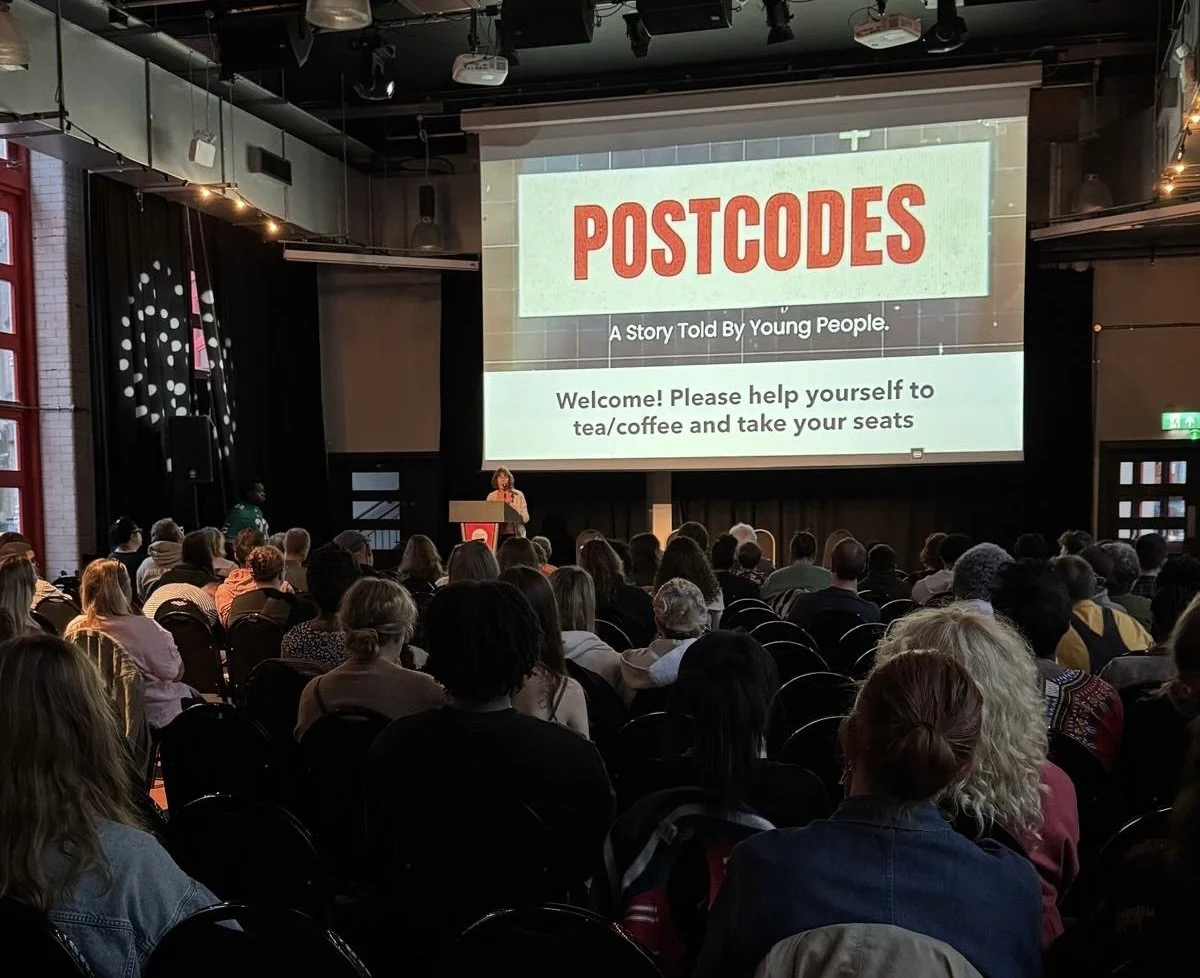
Knife crime and instances of youth violence are a critical issue in Bristol, with 13,791 knife offences recorded between 2015 and 2025, according to data from Avon and Somerset Police. In many cases, rivalries between postcodes are at the heart of the conflict. On the 15th of October, The Scoop was invited to a film screening of documentary-short film ‘Postcodes’, which aims to tell the story from the perspective of the young people affected by the violence. The documentary uncovers the futility of the ‘postcode wars’ and questions how the tensions that fuel the conflict can be alleviated.
Directed by journalist Neil Maggs, Postcodes explores the ongoing postcode wars rife across Bristol, most notably between Knowle West and Hartcliffe (BS4 and BS13), yet aims to fill a void in a conversation had largely between adults by telling the story from a young person’s perspective. In the film, campaigner Serena Wiebe visits Hartcliffe and Knowle West for the first time, engaging in conversation with the young people affected by the rivalries, and whom the issue is acutely centred on. Children as young as 10 carry weapons, the film finds, a statistic both shocking but also indicative of the role young people play in the postcode wars. In both Knowle West and Hartcliffe the story is the same - young people in both areas appear to have an instinctive aversion to those from the respective rival locations, reactions ranging from scepticism to loathing. Yet in both instances, those interviewed fail to come up with a reason why they dislike their rival postcodes.
The 2021 murder of young boys Max Dixon and Mason Rist in Knowle West informs the conversation - Serena speaks to friends of the pair in Knowle West and in neutral spaces such as Ashton Gate Stadium - the consequence of youth violence on not just the lives of victims but the people around them is a primary throughline in the film. Postcodes succeeds in its careful balancing of tone, giving the discussion around knife crime the space it needs to breathe whilst intersplicing it with light-hearted moments and elements of humour. Serena engages in games of football, boxing and uno, reminding us that ultimately all children are the same, and that most young people simply want somewhere to play and discover who they are without being marred by stereotypes and stigma. Through this, the film dwells on the importance of youth spaces, such as Serena’s boxing gym Empire Fighting Chance, to give young people spaces to have fun and connect with others.
A panel followed the screening, featuring Neil Maggs, Serena Wiebe, Carl Boweb - a youth worker at Creative Youth Network, and Tom Tooth from Avon and Somerset Police. Speaking about the purpose of Postcodes, Neil spoke to the importance of seeing the central issues as they are, describing the film as balanced and gritty whilst being “solution-focused”. Additionally, he highlighted the need to hear the voices of young people, citing the lack of media response from young people as a key schism in media coverage of the postcode wars. Serena reinforced this idea, noting how most decisions concerning young people are made by adults. Carl Bowen attempts to diagnose the reason why numerical postcode identity matters so much to young people, something Neil Maggs suggests has only really emerged in the last ten years, pointing out how adults can sometimes alienate young people and stressing the importance of forging relationships with those your own age. For many young people, postcodes serve as taglines to help find their identities, and Carl calls on adults to recognise that the fundamentals behind parasocial behaviour is a byproduct of a developing brain, rather than a systemic fault in all young people.
The root of the rivalries don’t just originate from the brain, however. As an audience member - a teacher from a Hartcliffe school - points out, parents play a large role in imbuing their children with postcode-based prejudices. Heather Williams, a spokesperson for Knowle West Health Park refers to a “generational trauma” felt by residents of the Knowle West and Hartcliffe areas, decades of socio-economic struggles causing locals to feel as though they are “not good enough”, and wanting others in similarly deprived positions to be more deprived than them.
Postcodes speaks to a degradation in the relationships between young people from areas such as Knowle West and Hartcliffe, and the police, even revealing that some young people are scared of police officers. Tom Tooth emphasises the need for police to work with young people at the heart of the conflict, and talks about the work police do in trying to find ways to intervene and prevent knife crimes. When asked about how to build bridges between young people and police officers, Tom referred to creating relationships with police - humanising the people behind the uniform. Shockingly, he revealed that some young people would rather be caught by police with a knife than be caught by a rival without one, underscoring the extent to which postcode wars inform the way some young people live their lives, but also implying that police need to rethink the way they deal with incidents in the aforementioned areas. One audience member challenged the police’s positive impact, referring to austerity cuts defunding youth spaces in favour of giving further funding to policing, suggesting that police presence in schools creates a “pipeline into prisons”. Tom disagreed: about 5 years ago, police were taken out of schools, which prompted a mixed response. Some felt as though they were missing out on important connections, he argued.
Finally, the panel discussed the importance of safe spaces and trusted relationships for young people. Neil describes how spaces for young people “help people feel they belong”, pointing to an increase in youth violence when youth clubs close, suggesting that they are all we have left. He cited a 70% reduction in youth services across the UK due to austerity cuts, emphasising the need for greater funding and resources. Serena reinforced this, offering that without safe spaces, young people would be out on the streets. In regards to the postcode rivalries, the panel agreed on the necessity for neutral spaces, such as The Station where the screening took place, Carl Bowen went on to describe the importance of giving young people experiences, alluding to generations of adults that never received the valuable opportunities youth clubs can provide making people “think the divisions are real”.
Ultimately, Postcodes dwells on the impact of postcode wars on the young people who live in areas such as Knowle West and Hartcliffe, painting the rivalries as futile and baseless. The documentary stresses the importance of youth spaces to allow young people to grow up and have fun without the burden of a constant fear to leave the house, whilst simultaneously displaying the joy and happiness experienced by so many young people when support systems are in place.
